We are FINALLY getting some winter-like weather here in seasonally tardy San Diego. It rained a bit last night. Not nearly enough, but every bit of moisture that reached the ground is very welcomed at this point of our prolonged drought.
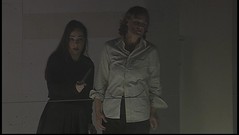
Anyhow, it is cool and cloudy and utterly beautiful outside, though I'm still stuck indoor for a few more hours (work has a way of doing that to you)... and basically can't think of a more fitting music for the moment than the charmingly melancholic duet between Lisa and Polina from Tchaikovsky's The Queen of Spade. This one courtesy of the amazing Bulgarian dual of Krassimira Stoyanova (Lisa) and Vesselina Kasarova (Polina) from a live concert a year or so ago. It's a pirate recording, so the sound quality is iffy, but what does come through is earworm-worthy in my book!
Showing posts with label earworms. Show all posts
Showing posts with label earworms. Show all posts
Monday, February 3, 2014


Monday, February 25, 2013
Earworm: Vesselina Kasarova does Tchaikovsky's Joan of Arc
My computer has been giving me the blues lately. Two separate bouts of the dreaded unresponsive blue screen in a week is enough to rattle even yours truly. So now that I've paid much of an arm and got the laptop fixed I'm indulging in a bit of my tried and true antidote to all degrees of rattledness... Vesselina Kasarova singing anything Slavic
In this case, the timeless clip of young VK (probably from the early 1990's) conjuring up Tchaikovsky's vision of St Joan of Arc, convinced of future victory and saying good bye to her hometown before riding off to make history, in a particularly stirring rendition of the Act I ending aria. From her many interviews I perfectly understand why Kasarova has avoided taking Slavic roles in the early part of her career... but man, her voice and musical pathos go so well with Tchaikovsky you don't even have to understand the sung Russian to get what she's airing!
PS: Keep the player going after Joan's aria for a really splendid Princess Eboli, too, if you have time. I know some people find Kasarova's singing body & facial movement distracting, but I find it endlessly fascinating. You can actually see where she's finding all those fantastic vocal colors to dramatize her sound with. The whole body as a virtuoso dramatic singing instrument!
In this case, the timeless clip of young VK (probably from the early 1990's) conjuring up Tchaikovsky's vision of St Joan of Arc, convinced of future victory and saying good bye to her hometown before riding off to make history, in a particularly stirring rendition of the Act I ending aria. From her many interviews I perfectly understand why Kasarova has avoided taking Slavic roles in the early part of her career... but man, her voice and musical pathos go so well with Tchaikovsky you don't even have to understand the sung Russian to get what she's airing!
PS: Keep the player going after Joan's aria for a really splendid Princess Eboli, too, if you have time. I know some people find Kasarova's singing body & facial movement distracting, but I find it endlessly fascinating. You can actually see where she's finding all those fantastic vocal colors to dramatize her sound with. The whole body as a virtuoso dramatic singing instrument!
Tuesday, January 8, 2013
A Touch of Broadway: Paloma San Basilio Does Evita
It's a bit weird, but somehow Broadway musicals have been going well on my mp3 player when I'm our riding up endless upslopes in the eastern mountains. I know a lot of opera fans have quite a lot of disdain for one Andrew Lloyd Webber, but the man sure knows how to compose tunes that stick to your ears. One of his many hits is, of course, Evita's famous 'Don't Cry For Me, Argentina'.
Like many, there is no Evita like Julie Covington for me... but when it comes to the show's flag tune, she has serious competition in the Spanish version by Paloma San Balisio. I mean... how the heck does she sing like that with tears rolling down her cheeks anyhow?
Like many, there is no Evita like Julie Covington for me... but when it comes to the show's flag tune, she has serious competition in the Spanish version by Paloma San Balisio. I mean... how the heck does she sing like that with tears rolling down her cheeks anyhow?
Saturday, June 2, 2012
Feeling like a seguedile...
My brain was going a bit addled with many shifty equations shuffling in my head. Must have a good and demented break!
Juliette Galstian to the rescue...
Thursday, December 22, 2011
Mostly Religion-Friendly Holiday Music CD
Happy Holidays!
My holiday music playlist this year is a bit more religion-friendly than usual since I've been spending way too much time with some really religious people of late. The Mormon missionaries I hung out with are required by their mission rules to avoid music that aren't church-based or classical instrumental. That quite foils my attempt at introducing them to many of my favorite tunes since the best bits of the juiciest opera tend to involve more passion than so chaste a post- and pre- polygamy religion can handle. But, a bit of compromise goes a long way in making and keeping friends who don't think the same way I do about things, so I made my favorite missionaries a custom CD of relatively religion-friendly opera and classical for Christmas. Here it is!
1. VILLA-LOBOS: Bachianas Brasileiras No. 5 [Elina Garanca]
2. MONTSALVATGE: Madrigal - El cant dels ocells [Garanca]
3. Bulgarian folksong: Svatba [Cosmic Voices of Bulgaria]
4. MOZART: Cosi fan tutte: Soave sia il vento [Lorengar, Berganza, Bacquier]
5. HUBAY: Le Zephyr [Mirijam Contzen & Valery Rogatchev]
6. MASCAGNI: Cavalleria Rusticana: Intermezzo
7. MASCAGNI: Cavalleria Rusticana: Regina coeli [Julia Varady]
8. Armenian folk hymn: Soorp [Isabel Beyrakdarian]
9. Rumanian hymn: O, ce veste minunata [Roberto Alagna]
10. Bulgarian folksong: Day mi, Bozhe, krila lebedovi [Vesselina Kasarova]
11. VERDI: La forza del destino: La vergine degli angeli [Leontyne Price]
12. SAINT-SAËNS: Samson et Dalila - Danse Bacchanale
13. MENDELSSOHN: Violin concerto in E minor [Tasmin Little]
I know I gave her a hard time in a few early reviews of her recordings, but Elina Garanca has been growing on me quite much. The voice is just to die for, and her musicianship is exquisite. She still isn't as keen on varying her vocal color as I'd like her to, but I'm finding her live performances a lot more engaging now than a few years ago. I love her in recital pieces, though. While the opera tracks from her Aria Cantilena CD leave me cold, Villa Lobos' Bachianas Brasileiras No. 5 and Montsalvatge's arrangement of the Catalan madrigal, El cant dels ocells, are great showpieces for her gorgeously flawless sound... and even benefit, I think, from her detachment. The first is a nature-loving chant, and the latter an intonation of the nativity as witnessed by the birds. I wonder if ancient Bethlehem was home to the same sorts of birds that live in Catalan now... but that's besides the point, I think.
One of my all time favorite recordings has to be the first CD of Le mystere des voix bulgare, which features this really cool Boyar wedding song, Svatba. Sung by the Cosmic Voices of Bulgaria Women's Choir, I thought its rousing spunk might spark celestial thoughts in a few listeners. It helps that the tune somehow transfers really well into the farewell trio from Mozart's farcical opera, Cosi fan tutte. The story is silly, but sometimes even the flakiest of ladies are capable of some really benevolent benefaction!
Of course, benevolent benefaction should prudently be taken in small doses or else immediately followed up by an upshot of merry laughter. I would supply my own, but imposing my mischievously evil laughter onto others this time of year could very well be considered bad form, so I outsourced it to a good humored pair of laughadelic violinist and pianist instead, belly-quaking to Jeno Hubay's The Zephir.
People often ask me what my most favorite opera is. It's not an easy question to answer since there are many favorites and they tend to appeal to me differently depending on my differing moods. The safest choice that I can always listen to, though, is Pietro Mascagni's Cavalleria Rusticana... with its gorgeous intermezzo and, since we're being friendly to religious listeners here, Easter hymns. Well, I know it isn't Easter yet, but at least it's better suited to the occasion than Turiddu's lusty Siciliana or his spatty duet with Santuzza (my favorite parts of the show! But then I'm a heathen).
While roaming around youtube checking out various clips by my favorite singers, I chanced on this rather cool one of Isabel Beyrakdarian singing an Armenian hymn. I liked it so much I looked up a few more Armenian songs, then decided to branch out a bit and searched for hymns from other countries with famous opera singers I know of, and hit pay dirt with Roberto Alagna's rendition of the Romanian hymn O ce veste minunata (he isn't Romanian, but his then wife, Angela Gheoghiu, is). Of course, that also led me to Bulgaria and this clip of Vesselina Kasarova singing 'Give Me, God, Wings of the Swan' with the Cosmic Voices of Bulgaria.
I figured to close the CD with a proper Italian opera prayer, Leonora's prayer from la forza del destino, but there was a lot of room left on the blank disc, so I couldn't resist filling it up with a few instrumental favorites. First off the bat, just because I can only stand listening to so much religious music without a proper break, the 'or classical instrumental' escape clause that the Mormon mission gave their missionaries is my main excuse for breaking out of the pious mode with the (in)famous Bacchanale Scene from Saint-Saëns' Samson et Dalila. After all, the story is biblical!
Amazed that there was still so much room on the disc after all that, I turned into a spoiled brat and put in my favorite recording of Mendelssohn's famous and extremely popular E minor violin concerto that just about every concert violinists has recorded. There are tons of awesome renditions of this thing around, but the fiddler who strikes it closest to my ideal combination of fleet-fingeredness and passion is the rather not that well-known (at least on this side of the Atlantic) English virtuoso Tasmin Little. The lass makes me dance... three legs and all!
Thursday, September 15, 2011
Know Your Opera Singers? - Who Are Sesto & Cornelia?
Giulio Cesare in Egitto (Julius Caesar in Egypt) is considered by many to be George Handel's best of many wonderful opera for its overabundance of enticingly beautiful music... much of which goes to everybody's favorite historical femme fatale, Cleopatra. For lovers of the lower voiced operatic women, however, there are always the mother and son pair of Cornelia and Sesto to busy our ears with.
But have your ears been busy enough with today's great mezzos and contraltos? Have a listen to the clip above and see if you could guess who the 9 singers of Cornelia and Sesto are! All the singers are pretty much contemporaries (though, unfortunately, not all are still with us)... And one of them has one Y chromosome too many, so to speak. 
Wednesday, June 8, 2011
Smorg's Favorite Tunes: The Last Five
Continuing from my previous post on my 10 most favorite pieces of music, here's the rest of the list:
6. Johann Strauss jr's Geschichten aus dem Wienerwald (AKA Tales from the Vienna Woods):
Strauss' waltzes were my first loves when it came to classical music, and the hallucinating clarinet entrance to 'Tales from the Vienna Woods' constituted something of a first crush. I had never heard a zither before either, and spent many hours associating different sorts of trees and meadows to the various instruments while replaying the tune in my head.
 |
| A path in the Torrey Hills. This is about as wooded as it gets in Southern California. |
Being 'lost in the woods' can be a jolly happy experience when you can wake up out of it anytime you want, of course. I've spent some time being semi-lost in the real woods on camping trips, though, and that isn't nearly as nice... Wonder why...
7. Bartok's Romanian Folkdances: (violin & piano arrangement)
What can I say? I love European folk songs! If I'm not hearing Béla Bartók violin & piano rearrangement of his Romanian Follkdances in my head in the pre-bedtime hours, I'm hearing movements from Smetana's Má vlast. It sort of makes up for my current inability to hop on the plane to trek across Europe and satisfy my gnawing travel-lust. And the nice thing about this pseudo-traveling via classical-folk music is that you can close your eyes while listening and 'see' those far away countries the way you would like to see them (as long as your vision is supported by the music, of course) rather than being limited to what they actually look like now. There is really no harm in dreaming as long as you don't confuse it with reality!
8. Danse de Prêtesses de Dagon & Printemps qui commence from Camille Saint-Saëns' Samson et Dalila:
Printemps qui commence,.... Spring, which commences
Portant l'espérance.............. leading in a new hope,
Aux cœurs amoureux,......... to the loving hearts.
Ton souffle qui passe.......... Your sigh that passes,
De la terre efface................ erasing from its path,
Les jours malheureux.......... the unhappy times.
Tout brûle en notre âme,..... Ablazed in our souls,
Et ta douce flamme............ and in your sweet flame,
Vient sécher nos pleurs;......come and dry our tears;
Tu rends à la terre,.......... You render to the earth,
Par un doux mistère,........ by a sweet mysticism,
Les fruits et les fleurs...... the fruits and the flowers.
En vain je suis belle!........ In vain is my beauty!
Mon cœur plein d'amour,. My heartful of love,
Pleurant l'infidèle,.......... crying over infidelity,
Attend son retour!.......... waiting for his return!
Vivant d'espérance,......... Living just in hope,
Mon cœur désolé............ my sorrowful heart
Garde souvenance.......... guards the memory
Du bonheur passé........... of past happiness.
À la nuit tombante......... As the night falls
J'irai triste amante,......... I'd go, with heavy heart,
M'asseoir au torrent,...... and sit by the torrent,
L'attendre en pleurant!.... to wait in tears for him!
Chassant ma tristesse,.... Away would go my sadness,
S'il revient un jour,......... should one day he returns,
À lui ma tendresse......... For him my tenderness
Et la douce ivresse......... and the sweet intoxication
Qu'un brûlant amour...... that a burning love
Garde à son retour!....... guards for his return.
Saint-Saëns Dalila has a lot of lovely lusty things to sing in the opera, the most famous being, of course, the wickedly sultry 'Mon coeur s'ouvre à ta voix'. For my slow-moving mellow temperament, though, her entrance aria here sticks longer in my intra-cranial CD player... especially when it is sung by a voice like Olga Borodina's or a soul like Vesselina Kasarova's. People like to diss Kasarova for 'pulling at the tempo' when she sings... well, at least it usually is the conductor who is dragging her out toward breathlessness. I've never heard VK drag anything out as stretchily as Olga B does when she sings the thing, but with a voice and self-possession like that she can pull and drag as much as she likes and no one in their right mind would even think of protesting. The longer she pulls, the more time you have to just soak in her luxurious notes.
9. 'Wochenend und Sonnenschein' (Comedian Harmonists):
This tune is better known in the English-speaking world as 'Happy Days Are Here Again'... The lyric is different, though, and so is the pathos. Man, if only I could get Barbra to sing the German version...
10. Mozart's concert aria KV. Anh 245, Io ti lascio, o cara, addio: (preferably sung by Vesselina Kasarova... again! ;o) )
I've always practiced low-impact camping/hiking/other things, so I really dig this sort of thinking (though I have a feeling that old Wolfie had something a bit more romantically chivalrous in mind when he arranged this music). It, like most of Mozart's arias, is of course a b*stard to sing well without self-strangling in the process. Kasarova doesn't just sing it well, though, she actually somehow manages to live it as well. All the more remarkable with this being a studio recording (which means it was probably not recorded straight through in one take -- all the harder to maintain any coherent pathos from start to finish). And darn if Sir Colin Davis and his Staatskapelle Dresden aren't some supporting partners in crime here.
So... what are your favorite bits of music?
Sunday, May 15, 2011
Smorg's Favorite Tunes: The First Five
I promised my good friend Georg at Washing Without Getting Wet Blog quite a long while ago to make a post about my 10 all time favorite pieces of music. My slow-sluggedness alone, I'm afraid, doesn't account for the delay. I have so many favorite tunes that it is hard to settle on just ten, so I found myself making changes to the list every time I look at it. :oP After many months of dragging, I'm putting my big foot down on the following numbers simply because I'd never get a post started if I don't quit fidgeting with it. So... here are the 10 pieces of music that pop up in my head to stay the most, much to my comfort and pleasure - depending on circumstances, listed in no particular order:

1. 'Gia dagli occhi il velo e tolto' from Mozart's Mitridate (preferably sung by Vesselina Kasarova)
Farnace spends most of the opera betraying his father and brother to get what he wants (his dad's fiancee) until his treachery comes home to roost and lands him in jail. Having time to re-examine his unwieldy behavior he now realizes his rottenness and resolves to reform himself in this long song of atonement. It is an amazingly elegant soul-searching tune especially considering that Mozart was only 14 years old when he came up with it. The aria was custom-composed for the wackily low-voiced alto-castrato Giuseppe Cicognani, which makes singing it quite miserable for most mezzo-sopranos and countertenors performing the role today. The melodic line lives in the dusky depth of the chest register and thrives on sadistic octave-yo-yoing vocal leaps done in legato... If anyone deserves to be treated like that by a composer, I suppose Farnace does!
2. Mendelssohn's E minor violin concerto (preferably played by Tasmin Little with the BBC Scottish Symph. Orch.)
Well... just because it is popular doesn't mean it is tart! It really took a genius to compose this thing. I've never heard how so many emotions can be put on just one violin string. And when the others are added, of course, the thing just explodes your mind in the cleanest eruption there is. No flash, no bang, no 'shock and awe', but pure acoustical delight that simply doesn't wane with repeated playing. I first encountered this piece via a video of Yehudi Menuhin performing this, I think, for a television program.

3. 'Kyrie' from Mozart's Mass in C minor (especially when sung by Barbara Bonney with JE Gardiner)
I first heard this number on the soundtrack cassette tape of the film Amadeus some time in the '90s while I was golfing around the US West Coast. It stuck in my head for the entire tournament with quite good result. To this day when I hear the tune I can remember much of the last round I played at Merced Country Club. It is always good to remember the 'good old days' when I was too naive to notice much 'not good' stuff that existed regardless of my ignorance. The rendition on the cassette was by Dame Felicity Lott with Sir Neville Mariner and the Academy of St. Martin-in-the-Field. A great performance in its own right! I'm not religious now, but I still enjoy the music no less. Everyone has to confront helplessness every now and then and I can easily substitute crying for godly mercy with the search for the strength within to deal with whatever problem I'm facing. It comes down to the same thing regardless of how one chooses to label it.
4. Sarasate's Introduction and Tarantella (preferably by Mirijam Contzen and Valery Rogatchev)
Another very popular violin & piano duet that somehow didn't hit it right off with me on the first few go's, I guess mainly because it is very tempting for the violinist to make it his/her own show (and the pianist tend to willingly accommodate that). When played like a 'duet' as Mirijam Contzen and Valery Rogatchev do, however, this is a deadly infectious harmonic conversation I have a hard time stopping myself from repeatedly eavesdropping upon with the aid of the 'replay' button on my stereo. Listen to it... they (the soloists) actually listen to each other!
Another very popular violin & piano duet that somehow didn't hit it right off with me on the first few go's, I guess mainly because it is very tempting for the violinist to make it his/her own show (and the pianist tend to willingly accommodate that). When played like a 'duet' as Mirijam Contzen and Valery Rogatchev do, however, this is a deadly infectious harmonic conversation I have a hard time stopping myself from repeatedly eavesdropping upon with the aid of the 'replay' button on my stereo. Listen to it... they (the soloists) actually listen to each other!
5. Verdi's Requiem
Not just one of two sections from it, but the whole thing! Of course, most people will be familiar with the fiery 'Dies irae' section. It has a knack for showing up in television commercials and in intense (and sometimes supernatural-ish) movie scenes, and, if I may say so, doesn't paint a very merciful picture of that notion of god that the piece invokes. I don't remember where I first heard the piece, or even which section first struck my ears. I'm partial toward the soprano-mezzo duo in 'Agnus Dei' and the surreptitious 'Quid sum miser', and, of course, everyone's favorite 'Libera me' -- not for the religious lyric of the thing but for the moodiness Verdi provides. Having this thing playing in my ears makes the brooding cloudy gray days especially enjoyable.
Not just one of two sections from it, but the whole thing! Of course, most people will be familiar with the fiery 'Dies irae' section. It has a knack for showing up in television commercials and in intense (and sometimes supernatural-ish) movie scenes, and, if I may say so, doesn't paint a very merciful picture of that notion of god that the piece invokes. I don't remember where I first heard the piece, or even which section first struck my ears. I'm partial toward the soprano-mezzo duo in 'Agnus Dei' and the surreptitious 'Quid sum miser', and, of course, everyone's favorite 'Libera me' -- not for the religious lyric of the thing but for the moodiness Verdi provides. Having this thing playing in my ears makes the brooding cloudy gray days especially enjoyable.
Thursday, August 12, 2010
Clouds are the celestial spice
Southern California and its Mediterranean climate isn't all that hospitable to clouds, especially during the dry summer months. So, I indulged myself a bit while out walking around last week and enjoying its unseasonably cloudy cool sky.
Laid on the cushy green grass in a park and trying to sort out what sort of atmospheric conditions were happening up high to facilitate different types of clouds and even that hypnotic looking spectral ball on the western sky, an unexpected piece of music popped up in my head. It was unexpected because I hadn't heard it since over a year ago... the last time I popped the excellent CD set of Offenbach's Orphee aux enfers (Orpheus in the Underworld) from the Opera de Lyon with Marc Minkowski conducting into my stereo. What you hear in this clip is a bit of the overture...
Addictively psychedelic, isn't it?
Laid on the cushy green grass in a park and trying to sort out what sort of atmospheric conditions were happening up high to facilitate different types of clouds and even that hypnotic looking spectral ball on the western sky, an unexpected piece of music popped up in my head. It was unexpected because I hadn't heard it since over a year ago... the last time I popped the excellent CD set of Offenbach's Orphee aux enfers (Orpheus in the Underworld) from the Opera de Lyon with Marc Minkowski conducting into my stereo. What you hear in this clip is a bit of the overture...
Addictively psychedelic, isn't it?
Wednesday, February 17, 2010
Deserted Island CD: Ashkenazy & Philharmonia do Beethoven's 5th & 7th
You would need to have been born deep in a jungle and die young to not be familiar with the opening chords of Beethoven’s 5th Symphony. And though his 7th Symphony isn’t all that popular among those who don’t listen to classical music regularly, its 2nd movement shows up in surprising numbers of film (though non-classical-music-fans would likely be unable to identify it). That naturally means that there are bus loads of recordings of these two pieces... Though if you have experimented with different recordings of the same piece of classical music before, then you would realize that such a notion that ‘the goal of classical music is to intone the music exactly as written by its composer’... or 'to replicate the ideal sound of the piece,' as if anyone aside from the composer can actually claim to have the perfect knowledge of what this ‘ideal’ sounds like, is completely preposterous. Any ‘objective’ notes written on the sheet of the music inevitably takes on a subjective quality the moment it is played by a living musician.
Just exactly how loud should the note be played? Or how long? At what speed? And how should the music be phrased to convey ‘what’ feeling? Or to portray ‘what’ emotion? Unless you are the composer, you don’t really have the final word on it... And I am willing to bet that many composers would find that their ideas about their own music can actually change upon returning to it after having gone off to experience something else for a while. Every performer brings his/her own experience and perspective to the piece of music they play... And this performance by the Philharmonia Orchestra under Vladimir Ashkenazy resonated with me so much when I first bought a cassette tape of it back in the mid 90's that no other recordings of the Fifth Symphony would satisfy me when I lost the cassette during a move in 1998. I spent years listening through all the recordings of this symphony at various music stores until finally stumbling on this Decca Label CD of it... Aside from my first encounter with Vesselina Kasarova’s Rosina in 2005 which converted me to an opera-fanatic, no other piece of music had affected me so much as this one.

Symphony No. 5 in C-minor, "Fate"
1. Allegro con brio
2. Andante con moto
3. Allegro - Scherzo
4. Allegro
(Recorded in 1982)
The first movement, Allegro con brio, is famous for its 8 jolting opening beats from the heavy strings (basses and cellos) that are thought to symbolize ‘fate knocking on the door.’ The imperious pounding that calls its listeners to gather up their arms and prepare for war (or revolution... or an uprising against tyranny), propels the music forward into a storm as the lighter strings (violins and violas) answer the call and pass the words around. The same opening call transforms itself into a less insistent but even more persuasive melody that alludes to a higher, nobler calling that makes it practically impossible for anyone to refuse to follow Beethoven’s music in its drive into the sinister bank of dark clouds gathering up ahead. The woodwinds provide an assuring glow of light from behind the clouds that render the prospect of a heroic death on the battlefield welcoming.
Being cut down in this divinely inspired combat doesn't even seem a possibility anyhow, thanks to Vladimir Ashkenazy and the Philharmonia’s sleek no-nonsense approach to the piece. Every note counts as if everything has been taken care of, leaving no room for philosophizing or melodramatizing... We’re heading off to battle, and we couldn’t care less whether we’ll come out of it alive or not!
The melancholic second movement, Andante con moto, perhaps my all time favorite chunk of symphonic music, sees us all in the calm before the storm. All the military preparation has been made. Now we have a bit of quiet time to reflect on things a bit, to anticipate what would happen, and to pay a brief tribute to Death... who is surely watching over the battlefield eager to reap our heroic offerings. Ashkenazy does a wonderful job in not letting this movement turn melodramatic or lapse into self doubt or pity. The ‘hero’ is fully aware of his mortality and 'how quiet it can all get when the crickets die', but... like Albus Dumbledore and those other wizards who don’t think that death is the worst possible thing in life, he isn’t afraid of it.
 This performance haunted me for years with its beautiful balance between the brighter theme of the hero's determination and the insistence of the fate (basses) that awaits its fulfillment. Ashkenazy's no nonsense vision jived so mesmerizingly with the Missourian electrical storms I had to drive through while going to work in the middle of the night that when I finally found this CD of the same performance after many years of listening through entire shelves of Beethoven 5th at music stores (was too dumb to note the names of the performers when I had the cassette), it was like Christmas in July!
The final two movements, Allegro- scherzo and Allegro-finale are connected. The settled strings opening finishes up the contemplation over the prospect of death before the hero is called back by the horn and brass calls, in a variation of the ‘fate’ theme of the first movement, to focus more on the presence as active battle draws near. The agitated double-basses stir up the charged atmosphere with a sonic adrenaline rush before it all settles into a watchful quietness that gives way as the battle commences with the drum rolls and the swiping strings under the watchful eyes of Fortuna, who hovers over the scene in the form of the French horns. The triumphal outcome is never in doubt in the sound of the Philharmonia under Ashkenazy, whose phrasing of each musical statement draws such vitality out of Beethoven’s heroic score that the air in my den turns electric every time I put this CD on the stereo. Everything is done just right (well, for yours truly, anyhow... which was why I kept hunting it down for years after I lost my first recording of this performance).
 Symphony No.7 A-major
1. Poco sostenuto - Vivace
2. Allegretto
3. Presto
4. Allegro con brio
(Recorded in 1984)
In a stark contrast to the previous symphony, which to me, is a romanticized vision of war by someone who has never participated an armed conflict in real life and who is so brimmed with the conviction of certain victory as to exude the air of invincibility. The 7th Symphony was composed by a man who has known sufferings, who has experienced the gore and has smelled Death as it brushed past him to snatch the last breath from the fellow he was standing next to... and who is now determined to make the time that he has count. The opening movement, Poco sostenuto - vivace, with its pastoral dance beginning, will likely remind some of Beethoven’s 6th Symphony, the “Pastoral.” Unlike that work, though, the 7th doesn’t come with a composer-provided program specifying exact ‘images’ being depicted in the music... which is one of the reasons why I like this work more.
The pastoral opening dance graduates into a burst of enthusiasm 5 minutes into the movement, and it is a different sort of enthusiasm than the one heard in the 5th Symphony. It is sustained by the unsinkable oboe, whose perk rubs onto the other instruments. It is like watching a mellow crowd of drinking buddies in a pub taking turn ad lib-ing a tale that one had started, with each new improvisation in the story introducing another orchestral modulation... Each one more fantastic than the previous, until they somehow land back on the E that leads everyone back to the original idea that started the whole thing in the first place. From then on any illusion of incoherence is banished in a blaze of glory.
It is to Ashkenazy and his Philhamonia Orchestra’s credit that one doesn’t feel a distractingly abrupt gear-change from the end of the first movement to the very dark premonition that begins the second movement, Allegretto. If you have seen the film, Mr. Holland’s Opus, this is the thing you hear in the movie as the devastated Mr. Holland describes the deafness that Beethoven suffered as he penned this composition (devastated because his son has just been born deaf). With the strings intoning the subdue and poignant main melody which then weds with the violas’ hovering theme as the basses pulse beneath them as if they are night creatures lurking just outside of the ring of the campfire, intending on swallowing the little blaze of light whole. But the little fire inside the ring of darkness is a persistent one. I don't know what exactly sustains this weary soul so that it would dare to overpower the suppressive bout of a depression as the one this music demonstrates, but this music really shows how to brood properly. You can indulge in the dark mood a bit as long as you refuse to let it rule your life!
Even the brooding Beethoven doesn't stay immortally depressed and 'snaps out of it' by the energetic third movement, Presto. It begins without much conviction... As if the weary soul is strong-arming himself out of the funk by manufacturing a burst of enthusiasm out of thin air. But it works, as the horns pick up the cue and the artificial quality of the enthusiasm turns vivid and real. Though there are several mini-relapses, the music wills itself out of it, dispatching the reeling demon (horns) with the strings’ final decisive chords.
Victory! Bright and sweet taste of victory snatched from the terrible jaws of defeat (as depicted in the 2nd movement)! The final movement, Allegro con brio, is literally a victory dance... and perhaps a slightly drunken one at that! The Philharmonia under Ashkenazy never lapses into incoherence, however. It is a victory well earned. Considering that this symphony was first performed in 1813, after the defeat of Napoleon, I can just imagine the crowd of audience getting up from their seat and dance around to celebrate their escape from tyranny all over again.
If you are still awake after all this rambling, then perhaps I don’t have to tell you if I recommend the purchase of this recording or not. The sound is beautifully well balanced and clean. And though there are equal performances of the 7th Symphony, Ashkenazy and the Philharmonia’s reading of the 5th is nothing short of definitive for me.
Beethoven Symphonies No. 5 & 7 (Ashkenazy/Philharmonia Orchestra)
1 CD. Play-time: 77:05 min. Case-lining includes track list and a brief note on the conception and premiere performance of the music (in English) by Kenneth Chalmers.
Just exactly how loud should the note be played? Or how long? At what speed? And how should the music be phrased to convey ‘what’ feeling? Or to portray ‘what’ emotion? Unless you are the composer, you don’t really have the final word on it... And I am willing to bet that many composers would find that their ideas about their own music can actually change upon returning to it after having gone off to experience something else for a while. Every performer brings his/her own experience and perspective to the piece of music they play... And this performance by the Philharmonia Orchestra under Vladimir Ashkenazy resonated with me so much when I first bought a cassette tape of it back in the mid 90's that no other recordings of the Fifth Symphony would satisfy me when I lost the cassette during a move in 1998. I spent years listening through all the recordings of this symphony at various music stores until finally stumbling on this Decca Label CD of it... Aside from my first encounter with Vesselina Kasarova’s Rosina in 2005 which converted me to an opera-fanatic, no other piece of music had affected me so much as this one.

Symphony No. 5 in C-minor, "Fate"
1. Allegro con brio
2. Andante con moto
3. Allegro - Scherzo
4. Allegro
(Recorded in 1982)
The first movement, Allegro con brio, is famous for its 8 jolting opening beats from the heavy strings (basses and cellos) that are thought to symbolize ‘fate knocking on the door.’ The imperious pounding that calls its listeners to gather up their arms and prepare for war (or revolution... or an uprising against tyranny), propels the music forward into a storm as the lighter strings (violins and violas) answer the call and pass the words around. The same opening call transforms itself into a less insistent but even more persuasive melody that alludes to a higher, nobler calling that makes it practically impossible for anyone to refuse to follow Beethoven’s music in its drive into the sinister bank of dark clouds gathering up ahead. The woodwinds provide an assuring glow of light from behind the clouds that render the prospect of a heroic death on the battlefield welcoming.
Being cut down in this divinely inspired combat doesn't even seem a possibility anyhow, thanks to Vladimir Ashkenazy and the Philharmonia’s sleek no-nonsense approach to the piece. Every note counts as if everything has been taken care of, leaving no room for philosophizing or melodramatizing... We’re heading off to battle, and we couldn’t care less whether we’ll come out of it alive or not!
The melancholic second movement, Andante con moto, perhaps my all time favorite chunk of symphonic music, sees us all in the calm before the storm. All the military preparation has been made. Now we have a bit of quiet time to reflect on things a bit, to anticipate what would happen, and to pay a brief tribute to Death... who is surely watching over the battlefield eager to reap our heroic offerings. Ashkenazy does a wonderful job in not letting this movement turn melodramatic or lapse into self doubt or pity. The ‘hero’ is fully aware of his mortality and 'how quiet it can all get when the crickets die', but... like Albus Dumbledore and those other wizards who don’t think that death is the worst possible thing in life, he isn’t afraid of it.
 This performance haunted me for years with its beautiful balance between the brighter theme of the hero's determination and the insistence of the fate (basses) that awaits its fulfillment. Ashkenazy's no nonsense vision jived so mesmerizingly with the Missourian electrical storms I had to drive through while going to work in the middle of the night that when I finally found this CD of the same performance after many years of listening through entire shelves of Beethoven 5th at music stores (was too dumb to note the names of the performers when I had the cassette), it was like Christmas in July!
The final two movements, Allegro- scherzo and Allegro-finale are connected. The settled strings opening finishes up the contemplation over the prospect of death before the hero is called back by the horn and brass calls, in a variation of the ‘fate’ theme of the first movement, to focus more on the presence as active battle draws near. The agitated double-basses stir up the charged atmosphere with a sonic adrenaline rush before it all settles into a watchful quietness that gives way as the battle commences with the drum rolls and the swiping strings under the watchful eyes of Fortuna, who hovers over the scene in the form of the French horns. The triumphal outcome is never in doubt in the sound of the Philharmonia under Ashkenazy, whose phrasing of each musical statement draws such vitality out of Beethoven’s heroic score that the air in my den turns electric every time I put this CD on the stereo. Everything is done just right (well, for yours truly, anyhow... which was why I kept hunting it down for years after I lost my first recording of this performance).
 Symphony No.7 A-major
1. Poco sostenuto - Vivace
2. Allegretto
3. Presto
4. Allegro con brio
(Recorded in 1984)
In a stark contrast to the previous symphony, which to me, is a romanticized vision of war by someone who has never participated an armed conflict in real life and who is so brimmed with the conviction of certain victory as to exude the air of invincibility. The 7th Symphony was composed by a man who has known sufferings, who has experienced the gore and has smelled Death as it brushed past him to snatch the last breath from the fellow he was standing next to... and who is now determined to make the time that he has count. The opening movement, Poco sostenuto - vivace, with its pastoral dance beginning, will likely remind some of Beethoven’s 6th Symphony, the “Pastoral.” Unlike that work, though, the 7th doesn’t come with a composer-provided program specifying exact ‘images’ being depicted in the music... which is one of the reasons why I like this work more.
The pastoral opening dance graduates into a burst of enthusiasm 5 minutes into the movement, and it is a different sort of enthusiasm than the one heard in the 5th Symphony. It is sustained by the unsinkable oboe, whose perk rubs onto the other instruments. It is like watching a mellow crowd of drinking buddies in a pub taking turn ad lib-ing a tale that one had started, with each new improvisation in the story introducing another orchestral modulation... Each one more fantastic than the previous, until they somehow land back on the E that leads everyone back to the original idea that started the whole thing in the first place. From then on any illusion of incoherence is banished in a blaze of glory.
It is to Ashkenazy and his Philhamonia Orchestra’s credit that one doesn’t feel a distractingly abrupt gear-change from the end of the first movement to the very dark premonition that begins the second movement, Allegretto. If you have seen the film, Mr. Holland’s Opus, this is the thing you hear in the movie as the devastated Mr. Holland describes the deafness that Beethoven suffered as he penned this composition (devastated because his son has just been born deaf). With the strings intoning the subdue and poignant main melody which then weds with the violas’ hovering theme as the basses pulse beneath them as if they are night creatures lurking just outside of the ring of the campfire, intending on swallowing the little blaze of light whole. But the little fire inside the ring of darkness is a persistent one. I don't know what exactly sustains this weary soul so that it would dare to overpower the suppressive bout of a depression as the one this music demonstrates, but this music really shows how to brood properly. You can indulge in the dark mood a bit as long as you refuse to let it rule your life!
Even the brooding Beethoven doesn't stay immortally depressed and 'snaps out of it' by the energetic third movement, Presto. It begins without much conviction... As if the weary soul is strong-arming himself out of the funk by manufacturing a burst of enthusiasm out of thin air. But it works, as the horns pick up the cue and the artificial quality of the enthusiasm turns vivid and real. Though there are several mini-relapses, the music wills itself out of it, dispatching the reeling demon (horns) with the strings’ final decisive chords.
Victory! Bright and sweet taste of victory snatched from the terrible jaws of defeat (as depicted in the 2nd movement)! The final movement, Allegro con brio, is literally a victory dance... and perhaps a slightly drunken one at that! The Philharmonia under Ashkenazy never lapses into incoherence, however. It is a victory well earned. Considering that this symphony was first performed in 1813, after the defeat of Napoleon, I can just imagine the crowd of audience getting up from their seat and dance around to celebrate their escape from tyranny all over again.
If you are still awake after all this rambling, then perhaps I don’t have to tell you if I recommend the purchase of this recording or not. The sound is beautifully well balanced and clean. And though there are equal performances of the 7th Symphony, Ashkenazy and the Philharmonia’s reading of the 5th is nothing short of definitive for me.
Beethoven Symphonies No. 5 & 7 (Ashkenazy/Philharmonia Orchestra)
1 CD. Play-time: 77:05 min. Case-lining includes track list and a brief note on the conception and premiere performance of the music (in English) by Kenneth Chalmers.
Saturday, March 21, 2009
In a mood for a song well sung...
Who do you turn to when you're in the mood for a mellow simple song that is gorgeously sung? I have VAI Music to thank for their DVD of Marilyn Horne's 1981 solo recital at Teatro la Scala, accompanied by Martin Katz. Perfectly done in every way...
Tuesday, March 3, 2009
Wednesday, February 25, 2009
Alpine in My Mind...
'September' is usually performed along with 3 other songs the German composer Richard Strauss wrote toward the end of his life in 1948. The (posthumous) grouping is known to us lovers of classical singing as 'Vier letzte Lieder' (Four Last Songs); Frühling (Spring), September, Beim Schlafengehen (Going to Sleep), and Im Abendrot (Evening).
I'm not a singer, so I'm allowed to love Strauss' music more (this thing is a bear to sing!). He had a magical way of setting a musical scene in a very cinematographic manner using his large orchestra. There are layers and layers of melodic textures that let you hear and see both the details and the big picture at the same time. A whole lot of instruments are playing, but none so loudly - enabling the musical portrait to be richly textured without becoming dense (a la Wagner).
'September' is set in D major. Listen to how the various strings and woodwinds create the pulsing resonance that puts you right in a Bavarian alpine garden on a misty day at the border of summer and fall. We zoom in on the crest of the violins, over the deep blue lake as the fluttering piccolo accentuates the waving field of flowers and its butterflies - swaying their delight in the coming surge of cool air. It is raining ever so gently (in waves of strummed harps) though the sun isn't yet totally absent (do you hear its ray breaking through the clouds with those two trumpets?). The instrumental colors swirl into an acoustic wave from which the soaring soprano voice launches itself...
I'm not a singer, so I'm allowed to love Strauss' music more (this thing is a bear to sing!). He had a magical way of setting a musical scene in a very cinematographic manner using his large orchestra. There are layers and layers of melodic textures that let you hear and see both the details and the big picture at the same time. A whole lot of instruments are playing, but none so loudly - enabling the musical portrait to be richly textured without becoming dense (a la Wagner).
'September' is set in D major. Listen to how the various strings and woodwinds create the pulsing resonance that puts you right in a Bavarian alpine garden on a misty day at the border of summer and fall. We zoom in on the crest of the violins, over the deep blue lake as the fluttering piccolo accentuates the waving field of flowers and its butterflies - swaying their delight in the coming surge of cool air. It is raining ever so gently (in waves of strummed harps) though the sun isn't yet totally absent (do you hear its ray breaking through the clouds with those two trumpets?). The instrumental colors swirl into an acoustic wave from which the soaring soprano voice launches itself...
Have you ever sung a more descriptive lullaby to summer? So effortlessly persuade its retirement (listen to that sigh it lets out along with its 'feeble smile'!)? Putting it gently to sleep at the soothing tones of the French horns while fading into the peaceful shade of metabolism-slowing gray of the new season? ... And what sweet repose has summer gone off to but to bless Morpheus with its shining acoustic memory of the passing garden. That Richard Strauss was a genius when it comes to orchestration!"Der Garten trauert,........................ The garden mourns,
kühl sinkt in die Blumen der Regen... as cold rain sinks into its flowers.
Der Sommer schauert...................... Summer shudders,
still seinem Ende entgegen................ quietly awaiting its ending.
Golden tropft Blatt um Blatt............... Golden leaves fall; one by oneLange noch bei den Rosen............... For a while yet it tarries by the roses
nieder vom hohen Akazienbaum.......... from the tall acacia tree
Sommer lächelt erstaunt und matt...... Smiles summer, feeble and stunned
In den sterbenden Gartentraum.......... at its fading garden dream.
bleibt er stehn, sehnt sich nach Ruh.... as it is drawn to its repose.
Langsam tut er................................ Slowly it closes
die müdgeword'nen Augen zu.............. its weary eyes."
- (Hermann Hesse)
Sunday, February 22, 2009
Operatic musing: Vitellia, Mozart's Petulently Fascinating Spoiled Princess
 A friend of mine got me thinking about Vitellia in Mozart's opera, La clemenza di Tito (the Clemency of Titus), this morning. This is truly one of the most morally repulsive operatic characters around... I'd think that she is topped only by Elettra/Elektra, Salome, and perhaps Katarina Izmailova in terms of unabated nastiness (at least Abigaille in Verdi's Nabucco and Puccini's Turandot do have a real change of heart at the end).
The story of La clemenza di Tito concerns the Roman emperor Tito (Titus Vespasianus)'s relentless display of clemency even when betrayed by his childhood best friend, Sesto (Sextus), who is coerced by Vitellia (the daughter of the late emperor Vitellius) into leading a conspiracy to assassinate Tito. The opera was commissioned for the coronation of Leopold II of Bohemia, and so Mozart's hands were tied when it comes to how Tito would be portrayed (he is practically the stand-in for Leopold, and so must come out spotlessly merciful at all cost). To compensate, old Wolfie bestowed upon Sesto and Vitellia some of the most beautiful and dramatically fascinating music he had ever penned.
On the music score, Vitellia is a downright hideous role... She has to be either a lirico-spinto soprano with really great low notes, or a true mezzo-soprano with really good top (the role covers well over 2 full octaves; peaking with a D6 during the Act I trio, Vengo! Aspettate!, and bottoming out with a G3 toward the end of her final rondo, Non piu di fiori).... and is able to cope with a tessitura (average pitch) that is just about as stable as one would expect from a flea-infested yelp-a-delic chihuahua. Having made the role darn near impossible to sing beautifully, Mozart had practically ensured that she is not a role for a beautiful vocalist, but for a dramatically apt singing actress.
How deliciously mean is Vitellia? Check out her two full arias from a 2003 performance of the opera at the Salzburg Festival... performed by the viciously captivating Dorothea Röschmann (Sesto, played here by Vesselina Kasarova, was written for a soprano castrato and is now usually sung by a mezzo-soprano).
The text goes:
"Deh, se piacer mi vuoi, lascia i sospetti tuoi/ Ah, if you want to please me, don't be so suspicious;
Non mi stancar con questo molesto dubitar./ Don't weary me with tiresome doubts.
Chi ciecamente crede, impegna a serbar fede;/ He who believes doubtlessly inspires faith in others;
Chi sempre inganni aspetta, alletta ad ingannar./ He whose faith wavers invites others' betrayal!"
Listen to how Mozart contrasts the two sections of the aria... The woman is a femme fatale from Hades! She sweet-talks him, knowing that he finds her irresistible... and then taunts him when she sees that he has capitulated to her will. It takes some really great acting both theatrically and vocally to pull this thing off without making the woman so thoroughly repulsive as to make it impossible for the audience to sympathize with how Sesto can be so attracted to such a person (after all, she's ordering him to kill his loyal childhood best bud and emperor!). Vitellia has to be both venomous and yet erotically desirable at the same time.
Alas for the conspirators, Tito, having been turned down by both Berenice (the Jewish princess he was smitten with) and Servilia (Sesto's sister, whom he doesn't really love, but wanted to marry in order to elevate his friend's status at court), decided to ask Vitellia to marry him after all. Frantic, Vitellia tried to rescind her order for Tito's assassination, but was too late. Rome is burned and Sesto, in the confusion of the scene, had stabbed someone resembling Tito, but isn't. Now that order has been restored and his conspirators had given him up, Sesto resolves to confess his part in the plot without revealing Vitellia's hand in it. Realizing that her boyfriend is more loyal to her than she had ever meant to return the favor, Vitellia finds herself in a moral dilemma.
Her second aria, 'Non piu di fiori' (which constitutes the climax of the opera), is actually explained in the recitative that leads into it. The aria itself only amplifies the sense of distress Vitellia is in as described by the recitative, which goes:
"Ecco il punto, o Vitellia, d'esaminar la tua costanza: avrai valor che basti a rimirar esangue il Sesto tuo fedel? Sesto, che t'ama più della vita sua? Che per tua colpa divenne reo? Che t'ubbidì crudele? Che ingiusta t'adorò? Che in faccia a morte sì gran fede ti serba, e tu frattanto non ignota a te stessa, andrai tranquilla al talamo d'Augusto? Ah, mi vedrei sempre Sesto d'intorno; e l'aure, e i sassi temerei che loquaci mi scoprissero a Tito. A' piedi suoi vadasi il tutto a palesar. Si scemi il delitto di Sesto, se scusar non si può, col fallo mio. D'impero e d'imenei, speranze, addio."So, Vitellia sort of has a conscience after all. Though her 'repentance' is caused by her own fear of future betrayal (perhaps by other conspirators who had eluded captivity) and that the death of Sesto would haunt her conscience.... and not from any love she has for him or because it is the right thing to do. And if there is any trace of remorse about having masterminded a plot to kill a (supposedly) benevolent ruler, I have yet to detect it... This woman is really a piece of work! She is so self-centered through and through that even when she does the right thing, it is still done for a selfish reason.
(Now is the moment, O Vitellia, to test your constancy: will you have enough courage to see your faithful Sesto dead? Sesto, who loves you more than his own life, who you talked into committing a crime, who obeyed you, cruel one, and adored you, unjust as you are; who in the face of death remains true to you, while you, with all these knowledge, calmly go to Caesar's bridal bed? Ah, I would always be haunted by Sesto and the fear that the breezes and the stones might betray me to Titus. Let me go and confess all at his feet. Let Sesto's crime, If it cannot be forgiven, be lessened through my guilt. Ah farewell, hopes of dominion and marriage!)
Though I have to give her credit since she is aware of what Sesto had sacrificed in his love for her (so she isn't quite a sociopath... just supremely spoiled and self-centered). And that she realizes what the mortal consequences of her confession would be and still does it is a plus... There are many people who wouldn't go through with it.
The actual aria:
"Non più di fiori vaghe catene/ No longer shall Hymen descendThat's really just her reiterating what she thinks the outcome of her confession would be. Hymen is the Greek god of wedding, so the first phrase says that she knows that her wedding (with Tito) would be called off. The second extrapolates further that she might even be executed for her part in the conspiracy. Then she airs some hope for mercy... though the music indicates that she realizes that mercy isn't a hopeful prospect now even when it concerns Tito.
Discenda Imene ad intrecciar./ to weave fair garlands of flowers.
Stretta fra barbare aspre ritorte/ Bound in harsh, cruel chains,
Veggo la morte ver me avanzar./ I see death advances on me.
Infelice! qual orrore! Ah, di me che si dirà?/ Wretched me! How horrible! What will be said of me?
Chi vedesse il mio dolore, pur avria di me pietà./ But my distress may move him to mercy."
The more she thinks about it, the more hysterical she gets. The obbligato bassett-horn (that really low tuned woodwind playing its own solo along with the soprano's voice) is her thought of Sesto. It coaxes her to do the right thing even as she becomes more and more horrified with the prospect that Tito's mercy had ran out.... And that is one big reason why I don't like it when some singing geniuses come along and manage to sing this beast of an aria beautifully. Vitellia's soul is anything but beautiful. It's a great big moral struggle for her to perform her first decent act in the entire opera. It has to sound ugly (or at the very least distressful) in parts .... especially when repeating the 'I'm done for, I'm hoping for mercy (but I ain't gonna get it)' motif where her vocal line dips deep into the mezzo-soprano range, going as low as a G3 toward the end of it.
It is such a cool thing that Mozart doesn't pause his music after this tour de force semi-mad-scene, but connects it right to the march to the arena (where Sesto is to become lion food), I think. That makes it easier for the soprano to stay in her quivering distressed mode in the final scene. It is just as well made it easier for Vitellia to confess, too..... She doesn't have much time to re-think it after the hysterical ending of her rondo to when the beaten up Sesto is brought in.
I'm not sure how significant 'Non piu di fiori' is in the overall scheme of the opera, but it is the place where a really good singing actress playing Vitellia can earn her very morally off-putting character some sympathy from the audience. It makes the character more intriguing... There is some hope that the Vitellia at the end of the opera has emerged a chastised and more predisposed to morality than the one at the beginning of the work (it takes quite a b*tch to sing that first aria! This character is manipulative as hell!).
Some hope, but not a lot...
Wednesday, February 18, 2009
Galstian: Another Mezzo To Fantasize About
After having spent years lighting up the stage as a soprano, Juliette Galstian, the Armenian opera singer, added her lustrous voice to the mezzo-soprano repertoire in a well received performance as Handel's Rinaldo at Zurich Opera last year.
With a voice and a personality like this, I can't wait to see a Carmen from her. She's quite up for the role!
With a voice and a personality like this, I can't wait to see a Carmen from her. She's quite up for the role!
Thursday, January 22, 2009
Great Singing is Alive and Well... If You Look for It
Why do I admire opera singers so much? Well... they are very good at what they do. You'd think that it doesn't take much skill to sing something in tune, but... can you sing what the two virtuoso mezzo soprani in the clip below sing? Live? Un-microphoned? While acting?
The first singer is Vivica Genaux, the young American from Alaska who can make rapid fire coloratura sound like a walk in the park. Everyone with working legs can run... but not many can run the way Olympic runners can. The same goes with opera singing. This is extreme agility at its most jaw-dropping. This performance is actually a studio recording (so she didn't do the whole thing in one go (though you can find live clips of her doing this beast of a song on Youtube.... and her live efforts are nearly as clean as this!). I use this clip to drive home that the obnoxiousness of the thing is actually written in the score (though the notes on the score are a lot tamer than the cadenza you actually hear toward the end since it is imperative that she ornaments every time the A phrase is repeated). 'Qual guerriero', being a bravura aria, doesn't really require much interpretation, but Genaux still contrasts the fast and slow sections very well to keep this thing from being one dimensional. Pretty awesome, ay?
The second singer is Vesselina Kasarova, the Bulgarian singer who doesn't just cope with Mozart's demand for naked vocal perfection, but also has the knack for making every note she sings tell a story. This is from a live staged performance. The final aria of Farnace doesn't require the vocal speed that the music Genaux sings does, but the vocal lines are so long (try singing along and see that you don't pass out before the 2nd phrase!) and exposed. It requires virtuosity of a different sort... If you make any mistake (smudging or missing a note... or any unsteadiness or blotchiness in the legato line at all), everyone can hear it. And the tessitura isn't very stable (much of the aria lies very low for a mezzo soprano, but she has to keep foraying upward and is never allowed to get comfy in any part of her range). Somehow, though, Kasarova manages to not just sing the notes but to also projects so much character in her vocal coloring that I listen to this and forget that I'm hearing a woman pretending to be a man who is turning his life around for the good. Instead, it is Farnace himself airing his own repentance... It is just that, his normal mode of expression is in song.
And do you know what the coolest thing is? As big a star as these two low-voiced women are, they are as nice and down to earth as can be off the stage. Their colleagues love them to death... and so do their fans.... simply because they've earned it.
If you enjoy these clips, Genaux recorded the aria on her 'Arias for Farinelli' CD, and Kasarova's full performance as Farnace is available on the Orfeo Label CD of Mozart's Mitridate from the Salzburg Festival 1997.
The first singer is Vivica Genaux, the young American from Alaska who can make rapid fire coloratura sound like a walk in the park. Everyone with working legs can run... but not many can run the way Olympic runners can. The same goes with opera singing. This is extreme agility at its most jaw-dropping. This performance is actually a studio recording (so she didn't do the whole thing in one go (though you can find live clips of her doing this beast of a song on Youtube.... and her live efforts are nearly as clean as this!). I use this clip to drive home that the obnoxiousness of the thing is actually written in the score (though the notes on the score are a lot tamer than the cadenza you actually hear toward the end since it is imperative that she ornaments every time the A phrase is repeated). 'Qual guerriero', being a bravura aria, doesn't really require much interpretation, but Genaux still contrasts the fast and slow sections very well to keep this thing from being one dimensional. Pretty awesome, ay?
The second singer is Vesselina Kasarova, the Bulgarian singer who doesn't just cope with Mozart's demand for naked vocal perfection, but also has the knack for making every note she sings tell a story. This is from a live staged performance. The final aria of Farnace doesn't require the vocal speed that the music Genaux sings does, but the vocal lines are so long (try singing along and see that you don't pass out before the 2nd phrase!) and exposed. It requires virtuosity of a different sort... If you make any mistake (smudging or missing a note... or any unsteadiness or blotchiness in the legato line at all), everyone can hear it. And the tessitura isn't very stable (much of the aria lies very low for a mezzo soprano, but she has to keep foraying upward and is never allowed to get comfy in any part of her range). Somehow, though, Kasarova manages to not just sing the notes but to also projects so much character in her vocal coloring that I listen to this and forget that I'm hearing a woman pretending to be a man who is turning his life around for the good. Instead, it is Farnace himself airing his own repentance... It is just that, his normal mode of expression is in song.
And do you know what the coolest thing is? As big a star as these two low-voiced women are, they are as nice and down to earth as can be off the stage. Their colleagues love them to death... and so do their fans.... simply because they've earned it.
If you enjoy these clips, Genaux recorded the aria on her 'Arias for Farinelli' CD, and Kasarova's full performance as Farnace is available on the Orfeo Label CD of Mozart's Mitridate from the Salzburg Festival 1997.
Subscribe to:
Posts (Atom)